Autonomous Sewerage from the Manufacturer
- Manufactured in Georgia
- In-house installation teams
- Warranty on all equipment
Advantages over a cesspit
Autonomous sewerage does not silt up thanks to biological treatment that breaks down waste. This eliminates frequent pumping and ensures stable system operation for many years.
Does not require expensive and regular waste pumping. A small bag of harmless sludge needs to be removed no more than once every 3 months. You can do it yourself or call a specialist.
The SBR treatment principle and the design of the autonomous sewerage prevent unpleasant odors, ensuring cleanliness and comfort around the house.
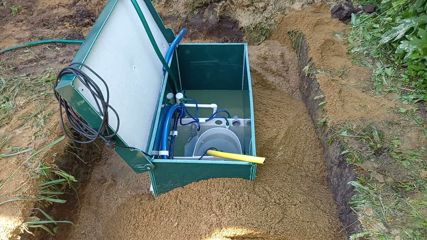
Can be installed on any plot, regardless of soil and terrain. This makes autonomous sewerage a universal solution for country houses and hard-to-reach locations.
How does wastewater treatment work?
We use SBR (Sequencing Batch Reactor) technology. This is an innovative biological wastewater treatment technology where the treatment processes (aeration, settling, and discharge of treated water) occur sequentially in a single reactor. After the reaction is complete, the water settles, and the settled sludge separates from the treated water.
The resulting sludge goes to a dewatering device, where water is returned back to the treatment unit, and the sludge settles in a bag that can be replaced either by yourself or by a service team. The contents of the bag can be used as fertilizer after 6 months or disposed of as household waste.
The water that has undergone biological treatment also passes through disinfection and additional filtration stages, after which it can be discharged into the soil or drainage system.
Block-module treatment plants
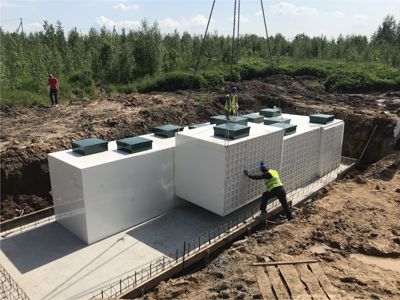
Designed for the treatment of domestic and industrial wastewater for residential complexes, settlements, cities, and enterprises. We provide a full range of services: design, production, delivery, and commissioning.
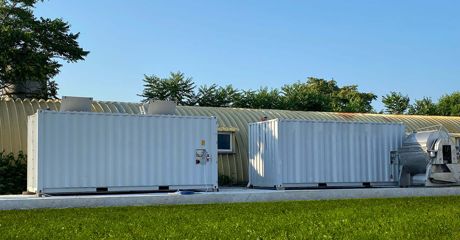
The plants are supplied as turnkey containerized solutions with equipment selection, block manufacturing, delivery, and connection. Treatment is carried out to meet discharge standards into water bodies. Capacity is calculated individually based on the number of users. Block-module treatment plants can be either above-ground or underground. Project development according to specific customer requirements is possible.
Advantages of modular treatment plants:
- Stepwise capacity increase
- Process automation
- Compact placement on the site
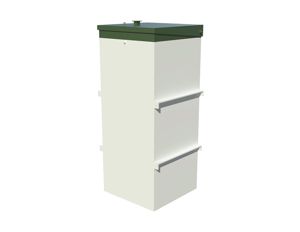
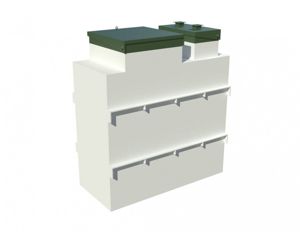
Popular models of wastewater treatment systems

Our Works


Frequently asked questions
What happens to the station during a power outage?+
During a power outage, the aeration process in the biostation stops. Gradually, as oxygen levels drop, aerobic bacteria begin to die off. The station can withstand interruptions of 10-20 hours calmly and without negative consequences.
How much electricity does the autonomous sewerage consume per day?+
The autonomous sewerage consumes approximately 1 kW of electricity per day thanks to compressors with low power consumption, which is comparable to the energy usage of a regular light bulb. During forced discharge, consumption can reach up to 1.6 kW/day.
Will the bacteria in the station die if it is not used for a long time?+
If the autonomous sewerage is not used for a long time, aerobic bacteria gradually die due to the lack of nutrients. The colony recovery takes 1-2 weeks with regular wastewater input and reduced use of detergents.
How often does the autonomous sewerage need maintenance?+
For a family of 4, a simple replacement of the harmless sludge bag is needed every 4 months (without calling sewage services). The frequency depends on the number of residents: the more people, the more often replacement is required. For seasonal use – once a year.